
What Is SB2 Gravel?
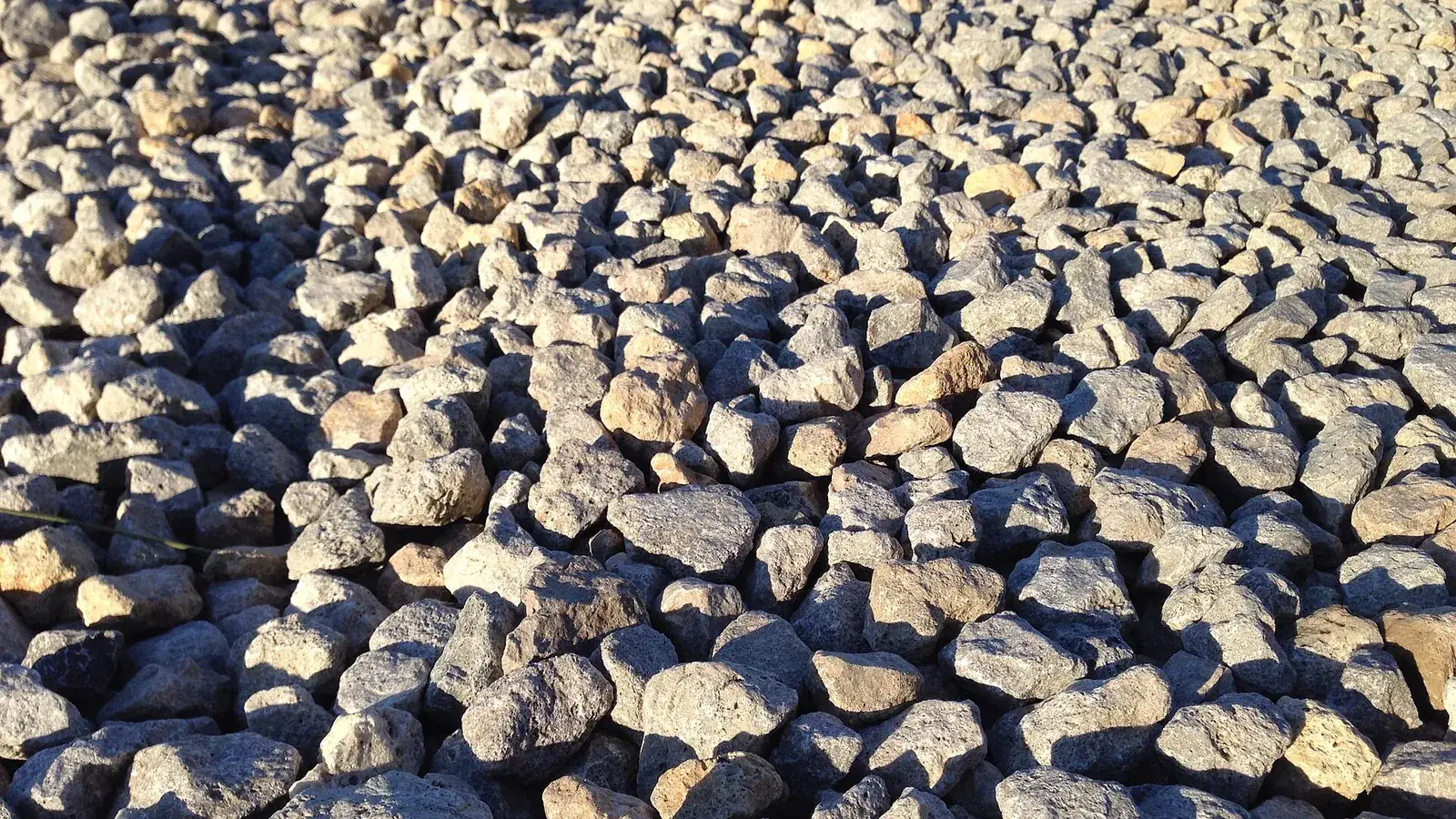
SB2 gravel, also written SB-2, is a yard name for crushed stone base rock with the fines left in. One Arkansas quarry sells its Class 7 base under that name, sized 1.5 inch minus with fines. It is sold for driveways, pathways, road bases and parking lots. It packs well, and the quarry calls it an excellent wet weather product.
That makes SB2 a strong base rock for a gravel drive in Arkansas. We are based in Monette and put in gravel driveways across Northeast Arkansas.
What Is SB2 Gravel Made Of?
SB2 is crushed quarry rock. The rock is broken down by a series of crushers, then screened by size and stockpiled. The label 1.5 inch minus means every piece passes a 1.5 inch screen. Everything smaller rides along, down to stone dust.
That small stuff is the fines. The Federal Highway Administration’s gravel roads guide says sand-sized pieces fill the voids between the stones. The finest particles bind the mix together. That blend of sizes is why base rock packs well.
Shape matters too. A University of Arkansas aggregates course teaches that crushed rock has angular faces that interlock. That interlock raises the load bearing capacity of the rock. The quarry says its SB-2 is similar to limestone base but harder.
Is SB2 the Same as Class 7 Base?
At that Arkansas quarry, yes. Its product sheet lists the rock as Class 7 Base (SB-2). Class 7 is a base rock grade in the Arkansas Department of Transportation base course table. All Class 7 rock passes a 1.5 inch sieve, and 50 to 90 percent passes three quarter inch. Between 3 and 12 percent is dust fine enough to pass a No. 200 sieve.
Names still vary from yard to yard. A national aggregate marketplace lists SB2 as 1.5 inch minus compactable limestone base. An Arkansas gravel delivery seller lists its SB-2 Base at 3/4 inch minus. The Arkansas quarry also sells a Class 8 base, 1 inch minus with fines. It lists the same uses as its SB-2.
So ask two questions when you order. What is the top size? Are the fines in? Those answers tell you more than the name on the ticket.
Is SB2 Good for a Driveway?
As a base, yes. It packs well and is sold for driveways. The quarry calls it an excellent wet weather product. It also makes less dust and tracks less than limestone base.
Crushed rock stays put better than round rock, too. The federal guide says broken stone embeds into a gravel surface much better than rounded, natural-shaped stone. It also resists movement under loads better.
Should anything go over it? The federal guide notes that base rock has larger top-sized stone and very little clay or fine material. Used as the driving surface, base rock does not form the same crust as surface gravel. The guide’s ideal is enough base depth for the loads, then a layer of surface gravel as the wearing course.
On a home drive, that can mean SB2 alone or SB2 under a smaller crushed top rock. The quarry lists driveways as a main use for SB2. The top layer can be a smaller, better looking gravel. A national building calculator notes it is also the layer most likely to migrate and need topping up.
How Does SB2 Compare With Crusher Run, #57, Pea Gravel and Creek Gravel?
The sizes come from Arkansas rock yard product lists, and they vary by yard.
| Rock | Size | Packs or rolls | Best use |
|---|---|---|---|
| SB2 (Class 7 base) | 1.5 inch minus with fines at one Arkansas quarry; 3/4 inch minus at one seller | Packs well | Driveway and road base, wet weather |
| Crusher run | 3/4 inch minus, blended with stone dust | Packs into a dense base | Base for farm roads and hillside drives |
| #57 stone | 3/16 inch to 1 inch | Angular, so it locks; little fine material to bind it | Drainage work and concrete |
| Pea gravel | About 3/8 inch | Rolls: smooth, rounded stones do not interlock | Garden paths and seating areas |
| Creek gravel | A natural mix of stone and sand | Rolls: smooth, rounded faces | Better once crushed |
The pattern is plain. Crushed rock with the fines in packs into a hard layer. Smooth, rounded stone does not interlock. The federal guide notes that traffic tends to push loose gravel out to the shoulder.
How Much SB2 Does a Driveway Take?
Start with cubic yards. Multiply the length by the width in feet, then by the depth in inches. Divide that number by 324. A national building calculator gets the same answer by turning each measurement into yards first.
Then turn yards into tons. That calculator figures crushed gravel at about 1.35 tons per cubic yard. It also notes that weight varies by material and moisture, so ask your yard for its number.
At 1.35 tons a yard, one ton is about 20 cubic feet of rock. That covers about 60 square feet at 4 inches deep, or about 40 square feet at 6 inches. A drive 100 feet long and 12 feet wide at 4 inches takes about 14.8 cubic yards. That comes to about 20 tons.
Layer depth has its own rule. The federal guide says each layer of gravel should be at least twice as thick as the top-sized stone. For 1.5 inch minus SB2, that is at least 3 inches a layer.
For what the rock and the work run at market prices, see what a gravel driveway costs in Arkansas.
How Is SB2 Spread and Packed?
The path gets graded and crowned before any rock lands. A crown is a high line down the middle, so water runs off both sides. For gravel roads, the federal guide recommends about 1/2 inch of crown per foot, about 4 percent. It warns against going past 6 percent.
On a 12 foot drive, 1/2 inch per foot puts the center about 3 inches above the edges. Then the SB2 goes down in layers, and each layer gets packed before the next. Rock packs best with some water in it. The guide calls that optimum moisture, the water content that lets material pack to its greatest density.
The guide recommends adding water and packing as each new layer goes down, where possible. We grade the path and spread the rock with a skid steer. The crown gets shaped as each layer goes down. Smaller jobs, like spreading a few loads of rock on a parking spot, fit our skid steer services.
When Is SB2 Alone Not Enough?
Good rock cannot make up for soft ground or standing water. The federal guide notes that gravel roads can easily rut or form potholes in long wet spells. Water held in the surface leads to ruts that can reach down into the ground below.
Soft spots come first. The guide’s order is to strengthen the soft ground, then lay the gravel. Low spots need fill and grading, and a washout needs the water turned with a crown or a shallow swale. That shaping is dirt work and grading, and it happens before the rock goes on.
If the drive crosses a ditch, it may need a culvert pipe. Another contractor sets that pipe, and we build and gravel the drive.
How Do You Get the Right Rock for Your Drive?
The right rock depends on the ground under it and where the water goes. We look at the route and the low spots, then put the estimate in writing. Call (870) 351-5107 for a free estimate on a new drive, or on regraveling a worn one.